
HVAC Guide · Cluster E
Fall Heating Check Before Poway's First 40°F Night
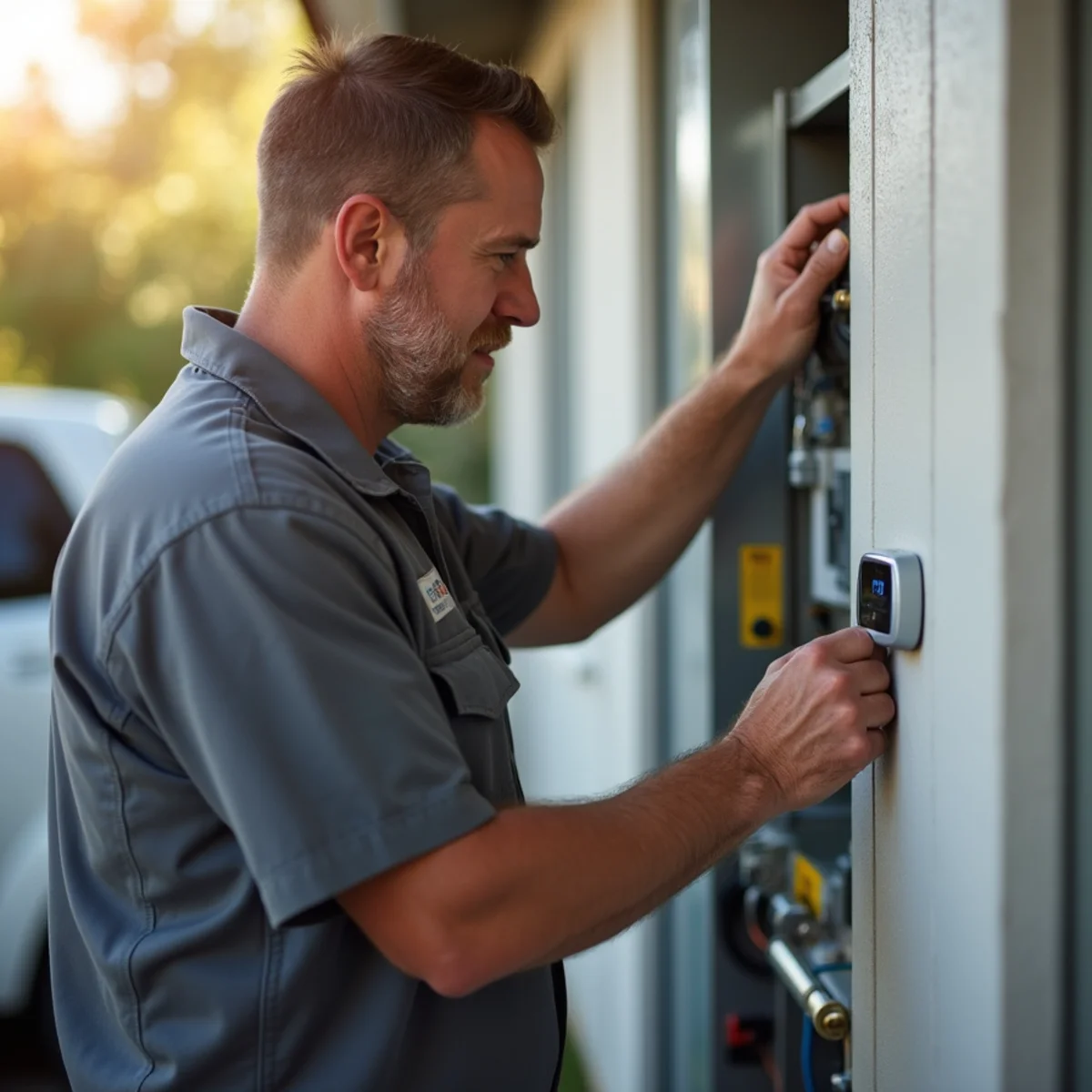
Poway's heating season sneaks up on you
Inland Poway and neighboring Rancho Bernardo swing hard between day and night in fall. Afternoons can still touch the 80s while overnight lows drop into the 40s once the Santa Ana pattern breaks. That first genuinely cold night is usually the moment people discover their furnace has a problem, because it has not run since spring.
The goal is simple: test the heat while it is still warm enough to wait for a part, not on the night you actually need it. A furnace that sat idle for six months can have a stuck igniter, a dust-fouled flame sensor, or a blower that struggles. Finding that in October is an appointment. Finding it during a 40-degree cold snap is an emergency call.
Run a controlled test now
Pick a cool morning and switch the thermostat to heat, then raise the setpoint several degrees above room temperature. Listen for the sequence: the system should call for heat, ignite or start the heat pump, and deliver warm air at the vents within a few minutes. A short delay is normal; no heat at all, or heat that quits after a minute, is not.
Expect a faint burning smell the first time a gas furnace runs each season. That is dust burning off the heat exchanger and it should clear within ten or fifteen minutes. If the smell is strong, smells electrical or acrid, or does not fade, shut the system down. Our guide on a furnace burning smell covers how to tell normal from a real problem.
Watch how the burner behaves. If it lights and then shuts off quickly, over and over, that is short cycling and it needs attention before winter. See furnace short cycling for the common causes, which range from a dirty flame sensor to an oversized system.
Gas safety comes first
If you ever smell rotten eggs or sulfur, do not test anything. That odorant is added to natural gas so you can detect a leak. Leave the house, avoid switches and open flames, and call SDG&E or 911 from outside. Only go back in after the utility clears it.
Check that your carbon monoxide detectors work before you run the furnace for the season. Press the test button, replace batteries, and confirm the units are not past their expiration date printed on the back. CO is odorless, and a cracked heat exchanger or a blocked flue can produce it. If a detector ever alarms, get everyone outside and call for help.
Safe DIY steps for fall
Replace the furnace filter. It shares the same filter as your AC in most homes, and a fresh one protects the blower and keeps airflow strong as you head into the run-heavy months. If Santa Ana dust has been bad, the filter may already be loaded even if it was changed in spring.
Clear the area around the indoor unit. Furnaces are often in garages, closets, or attics that collect stored boxes and clutter over the summer. Give the unit breathing room and keep anything flammable away from it. Confirm supply and return vents around the house are open and not blocked by furniture or rugs.
Look at the thermostat program. As nights cool, set a comfortable heating schedule and confirm the batteries are fresh if it is not hardwired. If you have a heat pump, know where the emergency or auxiliary heat setting is, but do not leave it running as your main source since it uses far more of Poway's expensive electricity.
What a pro handles on a heating visit
A licensed technician inspects the heat exchanger for cracks, cleans or replaces the flame sensor, checks the igniter, tests gas pressure, and verifies the flue draws properly. On a heat pump they check the refrigerant charge, test the reversing valve, and confirm the defrost cycle works. None of that is DIY; it needs tools, training, and combustion knowledge.
They also measure temperature rise across the furnace and check the blower and static pressure. In Poway's older housing stock, where the median home dates to the late 1970s, ducts and equipment are often original and worth a close look. If your furnace is near the end of its life, fall is the time to talk options before it fails, not after.
Beat the first cold snap
The pattern in Poway is predictable: the first real cold night sends a wave of no-heat calls, and heating repairs bunch up just as demand peaks. Running your test in early October and booking any needed work then keeps you warm and off the emergency schedule.
If your test turns up a problem, or you want a full heating inspection before winter, HVAC Poway CA serves Poway, Rancho Bernardo, and the surrounding communities with same-day local service and 24/7 emergency dispatch. Call +1 (327) 210-5999 and we will make sure the heat is ready before you need it.
First-run red flags: shut it down and call if you see these
- A burning or electrical smell that does not fade after 10 to 15 minutes
- The burner lights then quits within a minute, over and over
- No warm air at the vents several minutes after the call for heat
- A rotten-egg or sulfur smell near the furnace; leave first, then call the utility
- A carbon monoxide detector that alarms or is past its printed expiration
- Soot, rust, or scorching around the burner or flue
- A heat pump stuck on emergency or auxiliary heat as its main source
Have an HVAC problem in Poway?
Same-day service in Poway & Sabre Springs — 24/7 emergency dispatch countywide.
Frequently asked questions
Early October, while afternoons are still mild. Testing before the first 40-degree night means any repair is a scheduled appointment rather than an emergency call during a cold snap, when heating jobs stack up countywide.