
HVAC Guide · Cluster B
Does Homeowners Insurance Cover HVAC After Wildfire Smoke Damage?
The short answer
Homeowners insurance in California often covers HVAC damage from wildfire smoke, but it depends on your policy and how the damage happened. Smoke is a named or covered peril under many policies, so coating, corrosion, and contamination of your system from a wildfire event can qualify.
What it usually does not cover is gradual wear, dust from everyday Santa Ana winds, or a failure that was coming anyway. The line is between sudden, event-driven smoke damage and ordinary aging. Documentation is what decides which side of that line your claim lands on.
This is not legal or coverage advice, and every policy is different. Read yours and talk to your carrier. What we can do is help you document the HVAC side properly so your adjuster has what they need.
How wildfire smoke damages an HVAC system
Wildfire smoke is not just an odor, it is fine particulate and ash that your system pulls in and circulates. Poway knows this firsthand: the 2003 Cedar Fire and the 2007 Witch Creek Fire both reached this area, and Santa Ana winds from September through May can carry smoke from fires miles away.
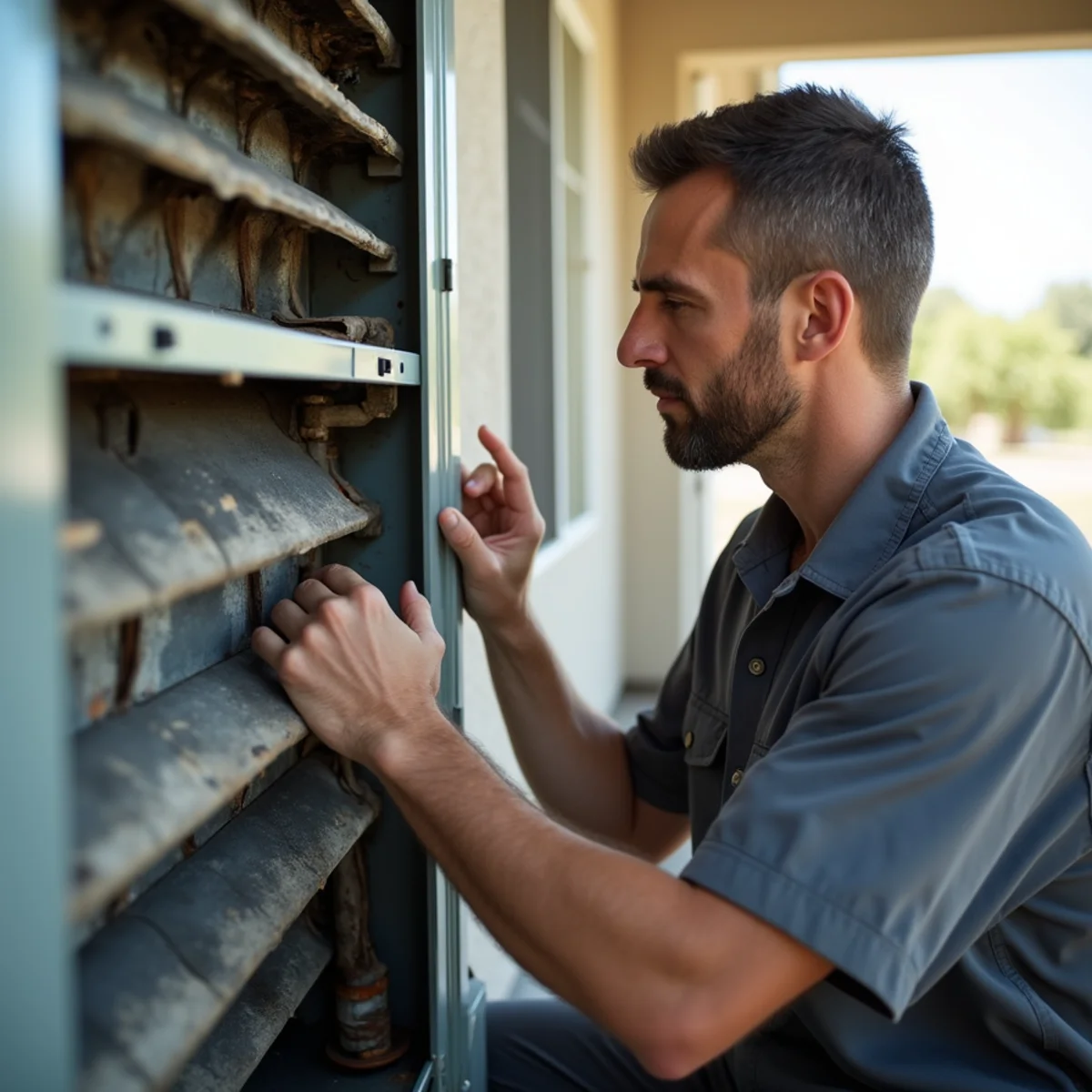
That particulate coats the evaporator coil, packs the blower, loads up filters almost immediately, and settles inside the ductwork. Ash can be slightly acidic, so on outdoor condenser coils and metal components it can start corrosion over time.
The result is reduced airflow, an efficiency drop, lingering smoke smell every time the system runs, and, if it is bad enough, contamination that recirculates into your indoor air. That indoor air quality angle is often what makes a claim worth filing.
It is worth knowing the difference between soot and everyday dust. Poway sees plenty of ordinary Santa Ana dust year-round, and carriers treat that as normal maintenance. Wildfire soot from a specific fire event is a different category, which is why tying the damage to a dated event is so important.
What insurance typically covers, and what it does not
Commonly covered after a documented wildfire event: professional cleaning of the coil, blower, and ducts; filter replacement; and in severe contamination cases, replacement of components that cannot be cleaned. If smoke made the home uninhabitable, some policies address that too.
Commonly not covered: routine dust and dirt buildup, pre-existing wear, deferred maintenance, or damage where you cannot tie the cause to a specific covered event. If your coil was already failing, the carrier may attribute it to age, not smoke.
Coverage also hinges on whether smoke is a covered peril in your policy and on your deductible. A small cleaning bill may fall under your deductible and not be worth a claim, while a contamination-driven component or duct replacement often clears it.
How to document your claim the right way
Act while the connection to the event is fresh. The stronger the timeline between the fire and the damage, the stronger the claim.
Photograph everything before cleaning: the loaded filter, ash on and around the condenser, visible residue at the registers, and the coil if it is accessible. Save the dates.
Get a professional inspection in writing. We provide a written assessment that describes the smoke contamination, the affected components, and the recommended remediation, which is exactly the kind of documentation adjusters look for.
Keep receipts for any emergency filter changes or interim work, and do not throw out damaged parts until the adjuster has signed off. If you are unsure, ask your carrier what they need before you clean the system.
What to do right after a smoke event
First, protect the system and your air. If heavy smoke is in the area, running the HVAC pulls that particulate through your home, so it can make sense to keep it off or run it only with a fresh, high-quality filter until the air clears.
Change the filter immediately once the event passes. A wildfire filter loads up fast, and a clogged filter both starves the system and stops filtering.
Do not attempt to clean the coil or ducts yourself with the system running. Disturbing settled ash can send it back into the air. A proper indoor air quality remediation cleans the system and captures the contaminants instead of recirculating them.
Where we fit in
We inspect the system, document the smoke damage in writing for your adjuster, and perform the remediation once your claim path is clear, whether that is a deep coil and blower cleaning, duct cleaning, filtration upgrades, or component replacement.
We do not decide your coverage, your carrier does. But a clear, professional HVAC assessment removes the guesswork about whether the damage is smoke-driven or wear, and it gives your adjuster something concrete to work from instead of a homeowner's description.
If you were near a recent fire and your system smells of smoke or your bills jumped, call us. We will assess it and give you the paperwork you need before you file.
Claim-file checklist after a Poway smoke event
- Dated photos of the loaded filter before you change it
- Photos of ash on and around the outdoor condenser
- Photos of residue at supply registers and returns
- A written HVAC assessment naming the contamination and remediation
- Receipts for emergency filter changes or interim work
- Damaged parts kept until the adjuster signs off
- Your deductible and whether smoke is a covered peril, confirmed with your carrier
Have an HVAC problem in Poway?
Same-day service in Poway & Sabre Springs — 24/7 emergency dispatch countywide.
Frequently asked questions
Often, yes, when smoke is a covered peril and the damage ties to a specific wildfire event. Coil and duct cleaning, filter replacement, and replacement of contaminated components are commonly covered. Gradual dust, wear, and deferred maintenance usually are not. Check your policy and deductible, and document the damage.