
HVAC Guide · Cluster A
Capacitor Failure After a Heat Spike: Poway's #1 Summer Breakdown
Why the Capacitor Fails First
The run capacitor is a small cylindrical part inside your outdoor condenser that gives the fan motor and compressor the electrical jolt they need to start and the steady push to keep running. It is also the single most common AC part we replace in Poway, and failures spike right after a Santa Ana heat wave.
Heat is a capacitor's enemy. On a 95-plus afternoon the metal condenser cabinet bakes in the sun, internal temperatures climb, and the electrolyte inside the capacitor breaks down faster. Add the extra electrical strain of the compressor working hard against high outdoor temperatures, and a capacitor that was quietly weakening finally gives out.
That is why the failures cluster on the hottest days. The part does not pick a mild morning to quit; it waits for the exact afternoon you most need cooling. In Poway and Sabre Springs, the first big heat spike of the season reliably kicks off our busiest capacitor week.
The Telltale Signs
The classic symptom is a condenser that hums but will not spin. You set the thermostat to cool, the indoor blower runs, but out back the fan sits still while the unit makes a low humming or buzzing sound. Sometimes you can nudge the fan blade with a stick and it limps into motion, a near-certain sign of a weak capacitor. Do not do this repeatedly; it confirms the diagnosis but does not fix anything.
Other signs include a hard clicking or a repeated attempt to start followed by silence, warm air from the vents while the indoor unit runs, or a system that trips its breaker when it tries to start the compressor. A swollen, bulging, or leaking capacitor top is visible proof, but you should not open the unit to look.
If your AC stopped altogether, our broader guide on an AC that stopped working in Poway helps you rule out the simple stuff like thermostat, breaker, and filter first, before you land on the capacitor.
Why You Should Not Replace It Yourself
A capacitor stores an electrical charge even after the power is off. That stored energy can deliver a serious, potentially dangerous shock if the part is mishandled, and it does not politely discharge just because you flipped the breaker. This is not a safe DIY part.
There is also the matter of matching. Capacitors are rated in microfarads and voltage, and installing the wrong rating can burn out the very motor or compressor you were trying to save, turning a modest repair into a major one. A technician confirms the rating, safely discharges the old part, and verifies the motor draws correct current afterward.
If you want to do anything before we arrive, shut the system off at the breaker so it stops trying to start, and photograph the model and serial plate on the condenser. Do not open the electrical access panel. Leave the discharge and swap to someone with the tools and training to do it safely.
What the Repair Looks Like
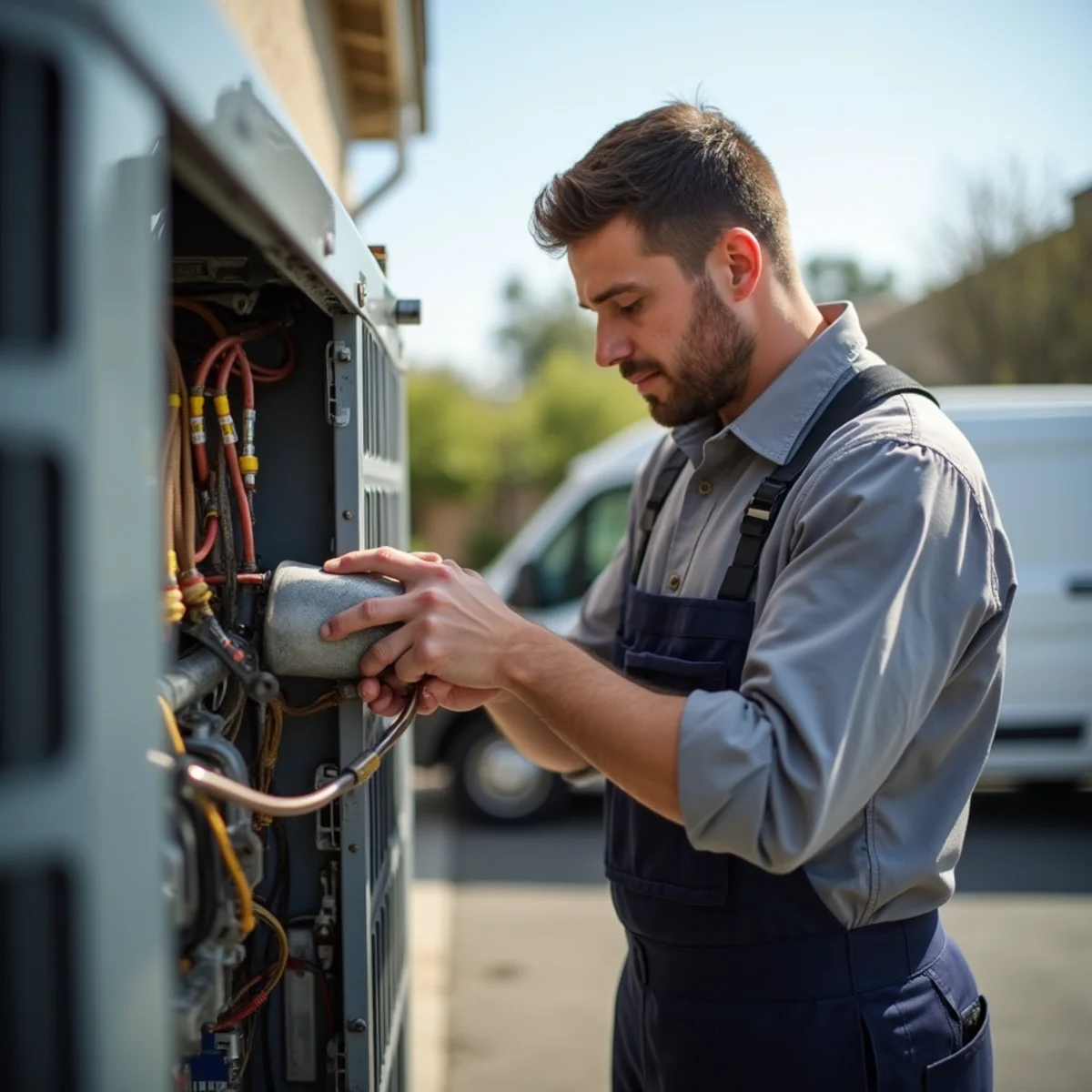
A capacitor replacement is usually one of the quicker AC repairs. The technician kills power at the disconnect, safely discharges the old capacitor, confirms the microfarad and voltage rating, installs a correctly matched part, and tests that the fan and compressor start cleanly and draw normal current.
The important extra step is figuring out why it failed. Sometimes it is just heat and age. But a capacitor can also fail because the motor it feeds is dragging, or because a dirty condenser coil made the whole system run hotter and harder than it should. A good tech checks those so you are not back in two weeks with a fresh capacitor cooked by the same underlying problem.
As part of an AC repair visit we also confirm the contactor, check refrigerant pressures if anything looks off, and make sure airflow is not being strangled by a filthy filter or blocked coil. Fixing the capacitor without checking the cause is how you end up paying twice.
How to Make Capacitors Last
You cannot make Poway summers cooler, but you can take the strain off the part. Keep the condenser coil clean and clear; a coil caked in Santa Ana dust and cottonwood fluff makes the system run hotter, which shortens capacitor life. Keep at least a couple of feet of clearance around the unit for airflow.
Change your filter on schedule so the system is not fighting restricted airflow, and consider providing afternoon shade for the condenser without blocking its airflow, since a unit baking in full sun runs hotter than one with some relief. These are small things that add years to the small parts.
The bigger lever is a maintenance visit before summer. When we tune up a system we test the capacitor's actual capacitance, not just whether it works today. A capacitor reading low is cheap to replace on a scheduled visit and expensive to ignore until it strands you on a 100-degree afternoon. Poway's dramatic temperature swings, covered in our guide to Poway temperature swings and your HVAC, are exactly the conditions that wear these parts out early.
Get It Fixed Same Day
A failed capacitor on a hot day is worth a prompt call, especially if the house is heating up or someone inside is vulnerable to the heat. It is a common, fixable failure, and we stock the parts to handle most on the first visit.
We offer same-day service in Poway and Sabre Springs and 24/7 emergency dispatch across San Diego County. Tell us the fan hums but will not spin and give us the model number off the plate, and we will arrive ready to swap it and check the cause.
Call HVAC Poway CA at +1 (327) 210-5999. We are licensed California C-20, insured, and EPA 608 certified, and you get a written, line-item quote before any work begins.
Quick symptom check for a failed capacitor
- Outdoor unit hums or buzzes but the fan does not spin
- Fan limps to life only if nudged with a stick
- Warm air from the vents while the indoor blower runs
- Repeated clicking, or a start-then-silence pattern
- Breaker trips when the compressor tries to start
- Bulging or leaking on the capacitor top (do not open the unit to look)
Have an HVAC problem in Poway?
Same-day service in Poway & Sabre Springs — 24/7 emergency dispatch countywide.
Frequently asked questions
Nudging the fan can confirm a weak capacitor, but running the system that way overheats the motor and can cause more expensive damage. Treat a spin-start as a diagnosis, not a fix. Shut the system off at the breaker and get the capacitor replaced before you rely on the AC again.