
HVAC Guide · Cluster E
Condenser Coil Cleaning: Poway's Dry-Season Dust Problem
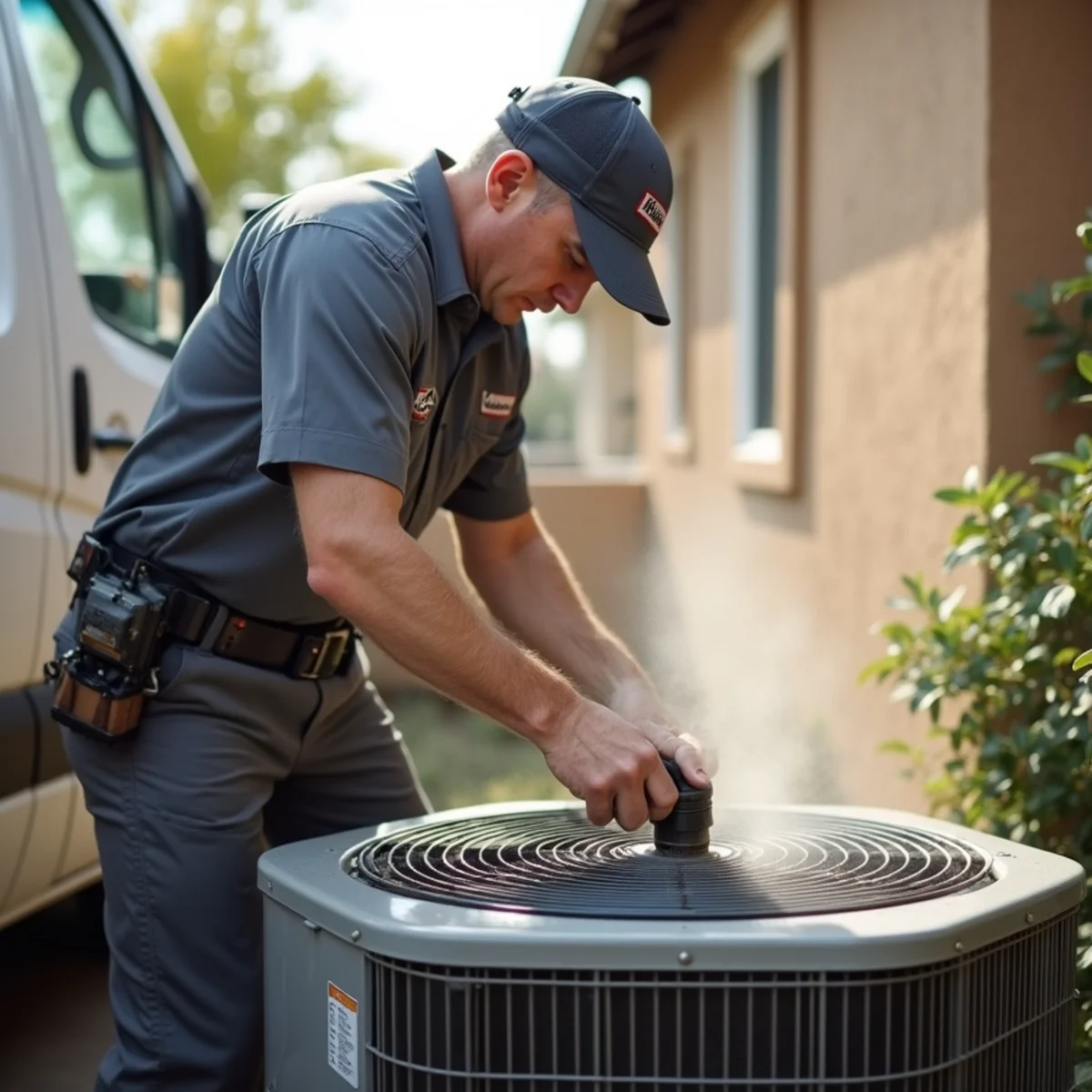
The hidden efficiency drain in Poway yards
Poway gets around thirteen inches of rain a year, almost all of it in winter. That means long dry stretches where fine dust settles on everything, including the outdoor condenser. Add Santa Ana winds that blow dirt and pollen across the Garden Road area and the rest of town, and the condenser coil becomes a dust magnet all summer.
The condenser coil is how your AC dumps heat outside. When dust cakes the fins, heat cannot escape, and the system works harder and longer to cool the same house. On Poway's high SDG&E rates that shows up directly on your bill. A dirty coil is one of the most common reasons a perfectly good AC struggles in July even though nothing is broken.
How to tell your coil is dirty
The clearest sign is an AC that runs and runs but never quite catches up on hot afternoons. You may notice the outdoor unit feels unusually hot, the fan runs constantly, or your energy bill climbed without a change in habits. In bad cases the high side pressure rises enough to trip the system off on a hot day.
Look at the unit directly. Fins that are gray, furry with dust, or matted with cottonwood fluff and grass clippings are telling you the coil needs cleaning. If you can barely see the metal fins through the debris, airflow through the coil is badly restricted. Our guide on a dirty condenser coil after Santa Ana winds shows what heavy buildup looks like.
Safe DIY rinse, step by step
You can safely do a light rinse yourself. First, kill power to the condenser at the outdoor disconnect box or the breaker. Never spray a unit that still has power. Confirm the fan is not spinning before you touch anything.
Clear the big debris by hand: pull weeds, remove leaves, and brush off grass clippings from the top grille and around the base. Then use a garden hose on a gentle spray, not a pressure washer, and rinse the coil from the inside out where you can reach, or straight through the fins from outside at low pressure. The fins are thin aluminum and bend easily, so keep the pressure low and the nozzle moving.
Rinse from top to bottom, let it drain, and give it time to dry before restoring power. Straighten only gently bent fins with light finger pressure if you are comfortable, but do not force them. Restore power at the disconnect, then run the system and confirm it cools better.
Where DIY stops
A garden-hose rinse handles surface dust. It does not remove the baked-on grime that works into the coil over a full dry season, and it will not touch anything on the refrigerant or electrical side. Do not remove the top fan assembly, poke tools between the fins, or open any refrigerant fitting. Pressure washers are a hard no; they flatten fins and can drive water into the motor.
If the coil is heavily fouled, a technician uses a proper coil cleaner and controlled rinse to break down the grime and restore heat transfer. They can also comb bent fins, check the fan motor, and measure the pressures and temperature split to confirm the cleaning actually helped. That combination is what returns a tired system to full efficiency, and it is not something a hose can match.
Keeping the coil clean through summer
Give the condenser two feet of clear space on every side and keep landscaping trimmed back. Avoid planting anything that sheds heavily right next to the unit, and keep the lawnmower discharge pointed away so clippings do not blow into the fins. If you have a pool or a dirt driveway nearby, the coil will dirty faster and deserve a mid-summer check.
A quick monthly look during the dusty months catches buildup before it hurts performance. Pair that with keeping your indoor air filter fresh, and you address both sides of the airflow equation. Small habits here keep the system efficient through the hottest weeks.
Fold it into a tune-up
The easiest way to keep the coil clean is to make a proper cleaning part of your annual spring service. A technician cleans the coil correctly, checks the charge, and confirms nothing else is dragging down efficiency. Our pre-summer AC tune-up checklist lays out the full visit.
If your AC is struggling on hot afternoons and the coil looks packed with dust, do not wait for it to trip off in a heat wave. HVAC Poway CA offers same-day local service in Poway and the Garden Road area plus 24/7 emergency dispatch countywide. Call +1 (327) 210-5999 for a professional coil cleaning and performance check.
When a rinse is not enough: call for a professional coil cleaning
- Cooling did not improve after you rinsed and let the unit dry
- The fins are greasy or the grime is baked on, not loose surface dust
- Fins are bent or matted flat and need combing
- The unit trips the breaker or struggles most on hot afternoons
- Cottonwood fluff or debris is packed deep between the fins
- It has been over a year since a proper chemical coil cleaning
- The outdoor unit runs hot and blows warm air out the top
Have an HVAC problem in Poway?
Same-day service in Poway & Sabre Springs — 24/7 emergency dispatch countywide.
Frequently asked questions
A light rinse once or twice during the dry season keeps most units clear, with a monthly visual check during dusty Santa Ana stretches. A thorough professional cleaning once a year, usually at your spring tune-up, handles the baked-on grime a hose cannot.