
HVAC Guide · Cluster C
Why Your Outdoor Unit Is Coated in Dust: Santa Ana Aftermath
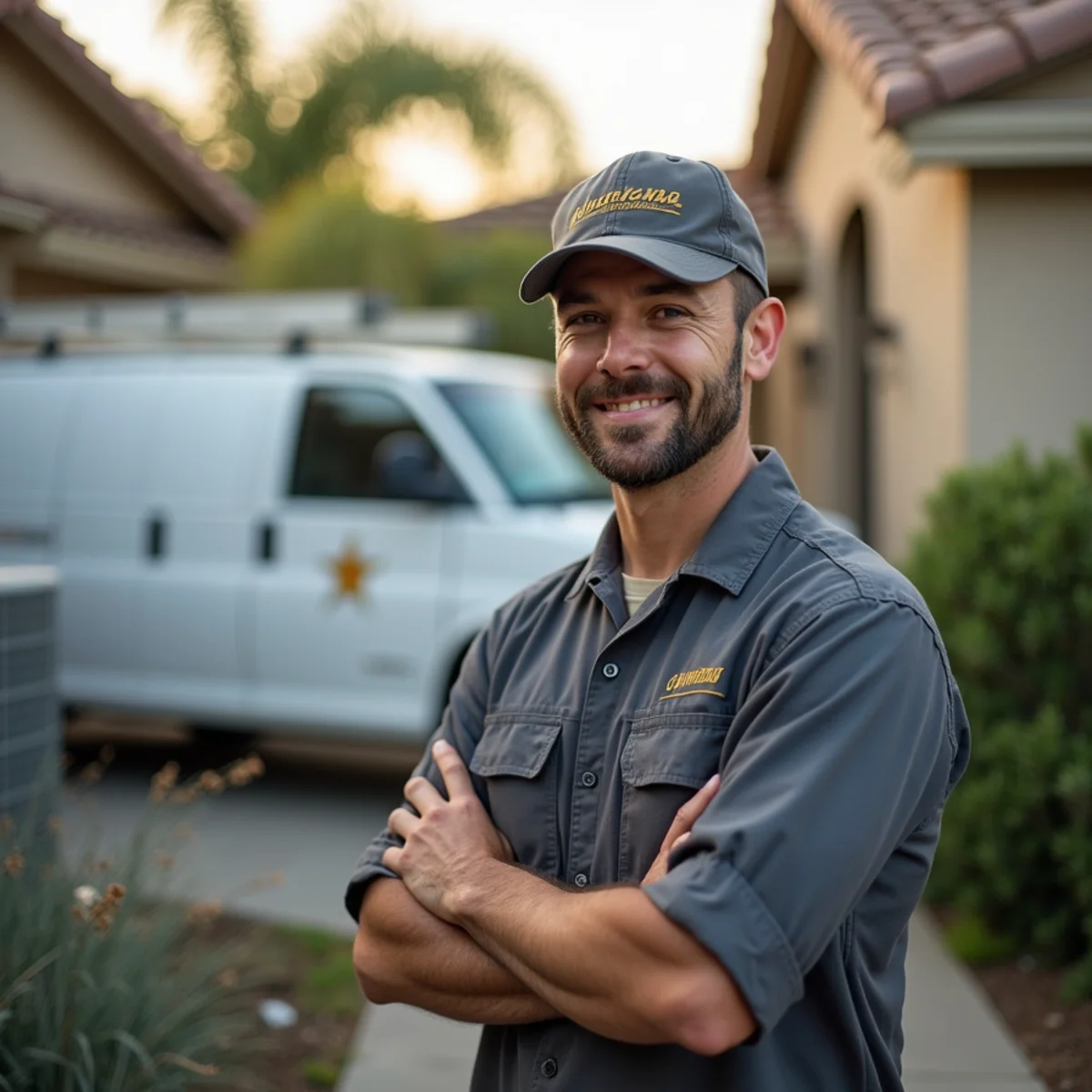
What the Santa Ana winds do to your AC
Santa Ana winds blow from the desert toward the coast, and from September through May they push hot, bone-dry air loaded with fine dust across Poway. They also spike temperatures right when you thought cooling season was winding down. That combination, a heat spike plus a dust storm, is hard on the one part of your AC that lives outdoors: the condenser.
Your outdoor unit's job is to reject the heat your home dumps into the refrigerant. It does that by blowing outdoor air across the condenser coil, a dense grid of thin metal fins. When Santa Ana dust settles into those fins, it forms an insulating blanket. The coil cannot shed heat, so the whole system labors. A dirty condenser coil santa ana problem looks minor from the outside, just a dusty box, but its effect on performance is anything but minor.
How a dusty coil quietly wrecks performance
A coated condenser coil raises what we call head pressure, the pressure the compressor works against. Higher head pressure means the compressor runs hotter, draws more amps, and moves less heat. You feel it as an AC that runs longer, cools less, and drives up an already-high SDG&E bill. In a bad case the compressor overheats and trips, or in the worst case fails outright, which is one of the most expensive repairs on the system.
The cruel part is timing. Santa Ana events bring the heat spikes that make you lean on the AC hardest, at the exact moment the coil is fouling and least able to keep up. So you crank the thermostat, the system strains against a choked coil in a heat wave, and small dust becomes a real failure. Cleaning the coil is cheap. Replacing a compressor that cooked because of a dirty coil is not.
Signs your coil needs attention
You can spot the trouble without tools. The obvious one is a visible film or mat of dust and debris on the outdoor unit's sides after a windy stretch. Beyond that, watch for cooling that got noticeably weaker after a Santa Ana event, an outdoor unit that feels hotter than usual and blows warm air out the top, longer runtimes, or a jump in your electric bill with no change in habits.
Two more clues: if the system trips its breaker on hot afternoons, a struggling, overheating compressor behind a dirty coil is a prime suspect, and if the copper lines or indoor coil frost up, restricted heat rejection can be part of the chain. Any of these after a dusty wind event is worth a look before the next heat spike arrives.
Cleaning it safely, and what to leave to a tech
You can do gentle maintenance yourself if you are careful. First, kill power at the disconnect box next to the unit or the breaker, never work on a live condenser. Clear leaves and debris from around and inside the top. Then rinse the coil from the inside out if you can access it, or straight through the fins, with a garden hose at normal pressure. Never use a pressure washer, it bends the delicate fins flat and makes the problem permanent.
Do not use harsh chemicals, do not bend or poke the fins, and do not open any refrigerant lines. If the coil is deeply packed, greasy, or the fins are already bent, or if performance does not recover after a rinse, that is a tech's job. A proper coil cleaning uses the right coil cleaner and technique to lift embedded grime without damage, and it comes with a full check of pressures and amp draw to confirm the system recovered.
Keeping dust out through Santa Ana season
Because Santa Anas run much of the year in Poway, a once-and-done cleaning is not enough. Give the outdoor unit two feet of clear space on all sides so it breathes, and keep landscaping, fence-line dust, and dryer vents from blowing debris at it. After a strong wind event, a quick visual check and a gentle rinse keeps the coil from ever getting fully choked.
The best insurance is a maintenance visit timed to the start of Santa Ana season. We clean the coil properly, check the charge, capacitor, and amp draw, and catch a struggling compressor before it fails in a heat spike. We serve the Twin Peaks Road area, Poway, and nearby communities with written, line-item quotes. If your outdoor unit is caked in dust and your cooling has slipped, call +1 (327) 210-5999 before the next hot wind rolls through.
What a Santa Ana blow leaves on your outdoor unit
| Blows in on Santa Ana winds | Lands on the coil as | Why it hurts heat rejection |
|---|---|---|
| Fine desert dust | A packed gray film across the fins | Insulates the coil so it cannot shed heat |
| Pollen and cottonwood fluff | A furry mat over the fin faces | Blocks airflow through the coil |
| Dry leaves and bark litter | Piles in the top grille and base | Chokes the fan intake and traps embers |
| Grass clippings and yard debris | Wedged between the fins | Cuts the surface area that rejects heat |
| Wildfire ash in bad years | A fine grit that bonds in humidity | Bakes on and needs a proper cleaning |
Have an HVAC problem in Poway?
Same-day service in Poway & Sabre Springs — 24/7 emergency dispatch countywide.
Frequently asked questions
Gently, yes. Shut power off at the disconnect first, clear debris from the top, and rinse the fins with a normal garden hose, ideally from the inside out. Never use a pressure washer or harsh chemicals, they bend the fins and cause permanent damage. If performance does not recover, have a tech do a proper coil cleaning.