
HVAC Guide · Cluster E
Defensible Space Around Your Outdoor Unit in WUI Poway
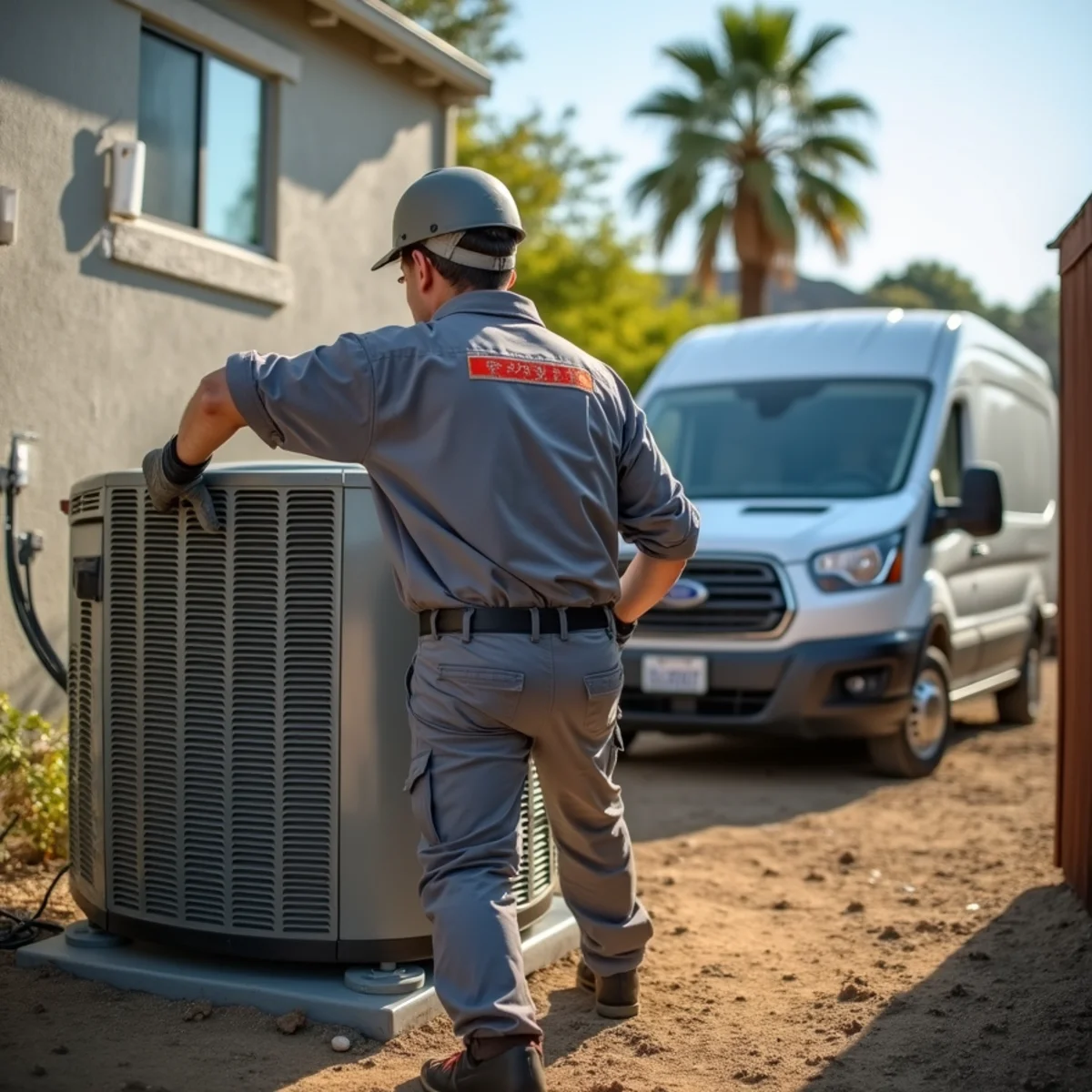
Why this matters in Poway's WUI
Much of Poway sits in the wildland-urban interface, where homes meet dry brush and open space. Neighborhoods near Lake Poway back right up to chaparral, and the area has real fire history: the 2003 Cedar Fire and the 2007 Witch Creek Fire both reached this part of the county. Defensible space is not a suggestion here, it is how homes survive an ember storm.
Your outdoor HVAC condenser plays a double role in that. It needs clear space around it for airflow to work, and it needs clear space around it so it does not become fuel or an ember trap next to your house. The good news is that the same clearance that keeps the unit efficient also makes it safer, so you get both benefits from one habit.
Clearance rules that serve both goals
For airflow, the condenser wants at least two feet of open space on every side and several feet of clearance above so hot air can rise off it freely. Crowding it with shrubs, fences, or stored items chokes the coil and makes the system run harder on Poway's expensive power.
For fire safety, that same zone should be free of anything that burns. Defensible space guidance calls for a lean, clean, green area immediately around structures, and your condenser sits right in that zone. Keep dry grass, dead plants, wood piles, and bark mulch away from the unit. Non-combustible ground cover like gravel or bare soil around the pad is ideal because it does not carry fire toward the equipment or the wall behind it.
Managing vegetation the smart way
Trim back shrubs so nothing overhangs or touches the unit, and remove dead branches and leaf litter that collect against it. Space plants out rather than letting them form a continuous fuel path from the brush line to your house. Replace flammable bark mulch near the unit and along the wall with rock or decomposed granite.
Keep the top grille and the fins clear of the dry debris that blows in during Santa Ana winds. That debris is both an airflow problem and a fire risk, since dry leaves packed into a unit are easy tinder for a landing ember. A quick clear-out during fire season handles both. For the efficiency side of that same debris problem, see our guide on condenser coil cleaning.
Ember-resistance around the equipment
Most homes lost in wildfires are ignited by wind-driven embers, not a wall of flame. Embers land in dry debris, blow into vents, and pile up against anything on the ground. Around your HVAC that means keeping the base clear, not storing combustibles beside the condenser, and clearing the dry litter that collects under and around it.
Look at the wall behind the unit too. Keep it free of stacked wood, dry plants, and clutter, and make sure any nearby vents and eaves are the ember-resistant type if you are upgrading. During red-flag conditions, a walk-around to clear debris from the condenser and its surroundings is a small task that meaningfully lowers risk. Wildfire smoke is the other side of fire season; our guide on wildfire smoke and air quality covers protecting the air indoors.
Safe habits and what to leave alone
Clearing vegetation and debris around the unit is safe DIY, and it is worth doing on a schedule through the dry months. What is not DIY is anything involving the electrical disconnect, the refrigerant lines, or the unit's internals. Do not open panels or spray water into a powered unit while tidying the area.
If you are relocating or replacing a condenser to improve clearance or move it away from a brush line, that is a licensed job. Placement affects airflow, line-set length, and code, and it needs a professional to do right. The same is true if you are hardening the home after a fire scare and rethinking where equipment sits.
Plan ahead, not during a warning
Defensible space works because it is done before fire season, not during an evacuation. Build the clear zone around your condenser now, keep it clear, and fold a fire-season debris check into your regular maintenance. It protects your home and keeps the system running efficiently through Poway's hottest, driest weeks.
If you want a professional to assess clearance, airflow, and safe placement of your outdoor unit, HVAC Poway CA serves the Lake Poway area and the surrounding communities. Call +1 (327) 210-5999 for same-day local service or 24/7 emergency dispatch, and we will help you keep the equipment safe and running.
Fire-season clearance checklist for your outdoor unit
- Keep at least two feet clear on every side and several feet above the unit
- Replace bark mulch near the pad with gravel or decomposed granite
- Clear dry grass, dead plants, and leaf litter from the base and top grille
- Trim shrubs so nothing overhangs or touches the condenser
- Keep wood piles and stored combustibles off the wall behind the unit
- Break up any continuous brush-to-house fuel path near the equipment
- Do a quick debris walk-around during red-flag Santa Ana conditions
- Leave the disconnect, refrigerant lines, and internals to a licensed tech
Have an HVAC problem in Poway?
Same-day service in Poway & Sabre Springs — 24/7 emergency dispatch countywide.
Frequently asked questions
Give the condenser at least two feet of open space on every side and several feet above for airflow. In Poway's wildfire zones, keep that same zone free of dry grass, dead plants, wood piles, and flammable mulch so it also serves as defensible space.