
HVAC Guide · Cluster A
Refrigerant Leak Signs to Catch Before Poway's Next 100°F Day
Why Catch a Leak Early
Refrigerant is the fluid your AC uses to move heat out of the house. Unlike gas or fuel, it is not consumed; a system that is low on refrigerant has a leak, full stop. Adding more without finding and fixing the leak just delays the failure and wastes money.
The reason to catch it early is timing. A slow leak lets the system limp along on mild days, so nothing seems wrong. Then a Poway heat spike arrives, the system needs its full capacity, and the low charge cannot deliver. You lose cooling on the exact 100-degree afternoon when you need it most, and now you are calling for emergency service in the heat.
Spotting the signs during spring or a mild stretch means a calm, scheduled repair instead of a sweaty emergency. Below are the symptoms worth watching for.
The Signs You Can Notice
Weak or warm airflow is the most common early sign. The system runs, air comes from the vents, but it is not as cold as it used to be, and the house takes longer to reach the setpoint. On a hot day it may never get there.
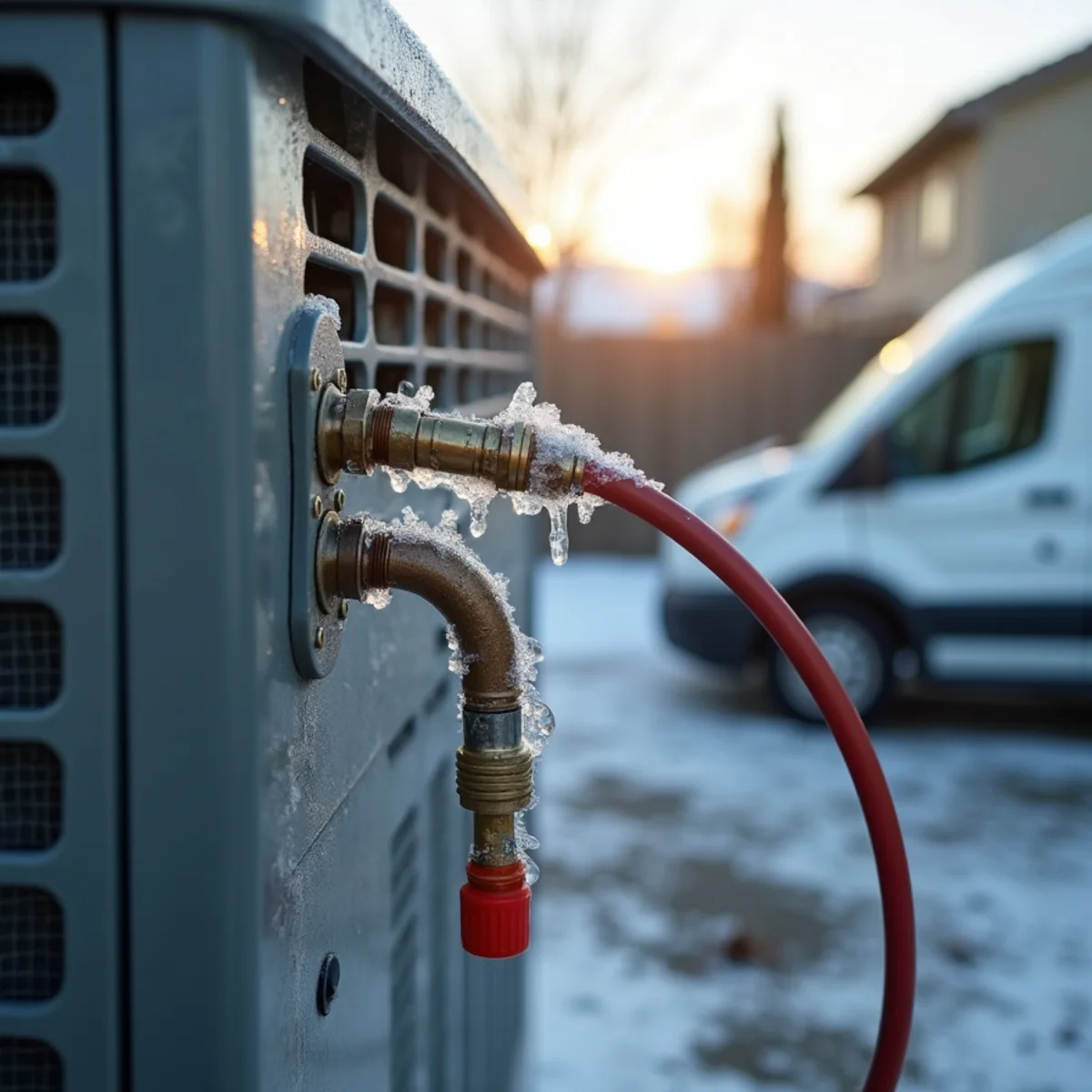
Ice is a classic tell. A low charge drops the coil temperature until moisture freezes on the indoor evaporator coil or the copper refrigerant lines outside. If you see frost or ice on the lines or the indoor unit, turn cooling off, switch the fan to ON to help it thaw, and do not run cooling again until it is checked. Running an iced system can damage the compressor.
Other clues include a hissing or bubbling sound near the lines, which can be refrigerant escaping, longer run times, climbing electric bills as the system works harder for less cooling, and more humidity indoors. Any one of these on its own is worth watching; two or more together points strongly at a leak.
Why Poway Systems Spring Leaks
Refrigerant leaks develop from vibration, corrosion, and age. Over years of running, the copper lines, coil joints, and fittings flex with every cycle, and tiny cracks or loosened connections open up. The coils themselves can develop pinhole leaks from corrosion over time.
Poway's climate adds its own stress. Big daily temperature swings, from cool June-gloom mornings to 90-plus afternoons, mean the metal expands and contracts constantly, working joints loose over the years. Coastal-influenced air and hard-water mineral exposure can accelerate corrosion on some components.
Age is the multiplier. Many Poway homes date to the late 1970s, and plenty run first- or second-generation replacement systems that have been cycling for a decade or more. The older the system, the more likely a joint or coil has finally developed a leak. Rancho Penasquitos and the surrounding inland communities see the same pattern.
What Not to Do
Do not buy a DIY top-off kit. Refrigerant handling is regulated, and by law it takes EPA Section 608 certification to purchase and handle most refrigerants for a reason. Overcharging or mixing the wrong refrigerant can damage the compressor, the most expensive part of the system, and turn a repair into a replacement.
Do not just keep adding refrigerant season after season. Every recharge without a leak repair vents refrigerant into the atmosphere, costs you money, and postpones the real fix while the leak grows. It is the definition of throwing good money after bad.
And do not keep running a system that is icing up. The ice is a symptom of a real problem, and running the compressor against a frozen coil can destroy it. Turn it off, let it thaw, and get it diagnosed.
How the Repair Works
A proper refrigerant leak repair starts with finding the leak, not just refilling. We use electronic leak detectors, and where needed dye or pressure testing, to pinpoint exactly where refrigerant is escaping, whether it is a fitting, a coil, or a line.
Once located, we repair or replace the leaking component, pull a proper vacuum to remove moisture and air from the system, and recharge to the manufacturer's exact specification by weight. Then we verify performance so you know the fix held. Doing it this way means the charge stays put instead of leaking out again in a few weeks.
Because refrigerant is regulated, this is genuinely not a DIY job; it takes EPA-certified handling and the right instruments. We are EPA 608 certified and licensed California C-20, and every repair comes with a written, line-item quote. If cost is on your mind, our guide to AC repair costs in Poway lays out realistic ranges.
Beat the Next Heat Spike
The best time to deal with a suspected leak is before the next 100-degree day, while you still have the luxury of scheduling. Catch the weak airflow, the occasional ice, or the creeping electric bill now, and you avoid losing cooling when the Santa Ana heat arrives.
We offer same-day service in Poway and Sabre Springs and 24/7 emergency dispatch across San Diego County, including Rancho Penasquitos. Tell us what you are seeing, weak cooling, ice on the lines, a hissing sound, and we will bring the leak-detection gear.
Call HVAC Poway CA at +1 (327) 210-5999. Licensed California C-20, insured, EPA 608 certified, with a written quote before any work begins.
Early refrigerant-leak signs to catch before a heat spike
- Air is cool but not truly cold, and the house lags on hot days
- Frost or ice on the copper lines or the indoor coil
- Hissing or bubbling near the refrigerant lines
- Cooling run times creeping longer week over week
- SDG&E bill climbing with no change in habits
- Muggier indoor air than usual while cooling
- One room that never quite reaches setpoint in the afternoon
Have an HVAC problem in Poway?
Same-day service in Poway & Sabre Springs — 24/7 emergency dispatch countywide.
Frequently asked questions
Yes. Refrigerant is not consumed the way fuel is; it circulates in a sealed loop. If your system is low, it is because refrigerant escaped somewhere, so the fix is to find and repair the leak, not just to add more. Repeatedly topping off without repair wastes money and vents refrigerant into the air.