
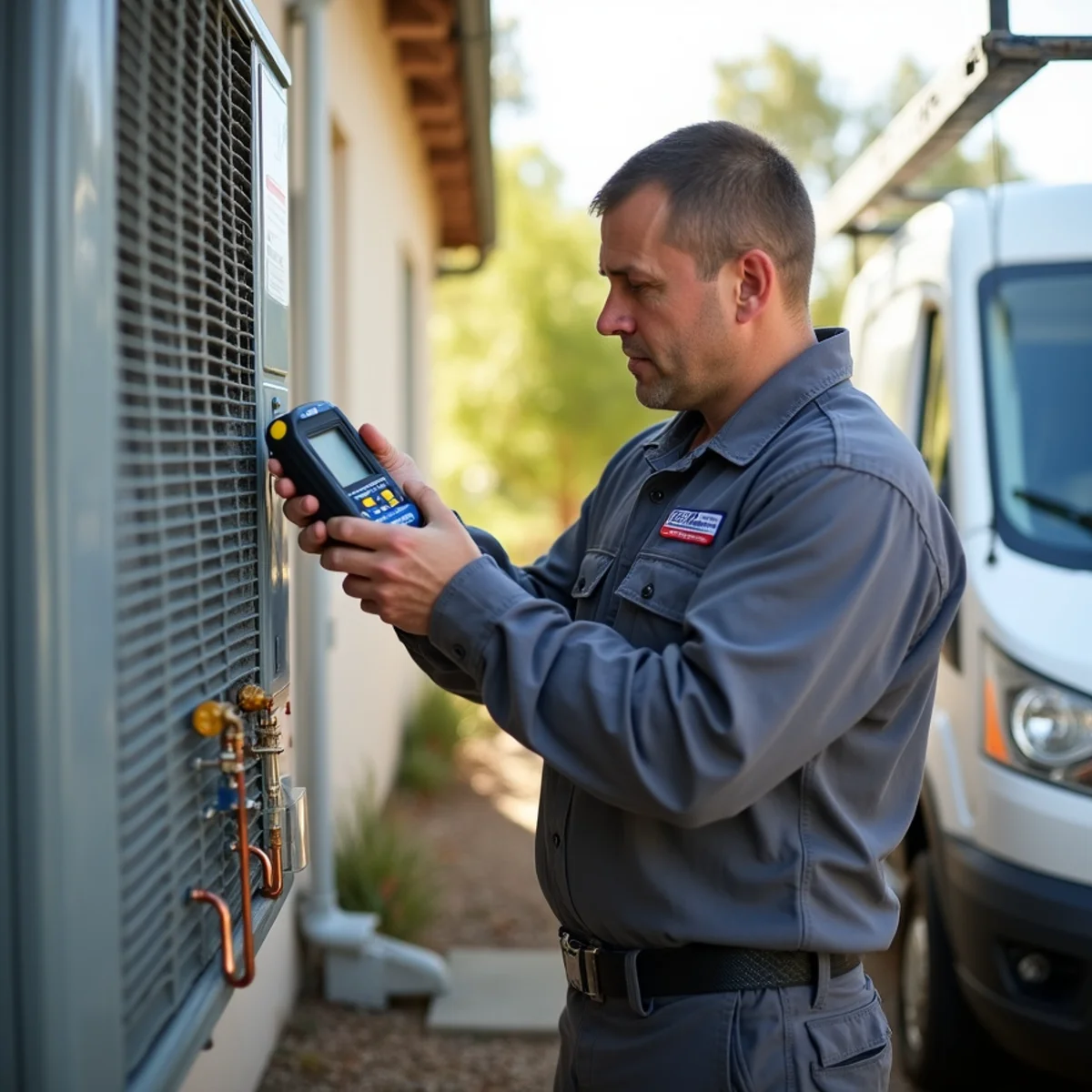
Same-day service in Poway & Sabre Springs — 24/7 emergency dispatch countywide.
Licensed & Insured · CA CSLB C-20 LicenseAdding refrigerant to a leaking system is like putting air in a tire with a nail in it — you will be back in a few weeks, and it is not good for the environment or your wallet. If your AC cools weakly, ices up, or hisses, the right fix is to find the leak, repair it, and then recharge to the exact factory weight.
Refrigerant is handled under EPA Section 608 rules, and simply venting or repeatedly topping off is neither legal nor smart. We use electronic detectors and, where needed, dye or nitrogen pressure testing to locate the leak precisely before we touch a gauge.
Once the leak is repaired — a fitting, a coil, a Schrader core, or a line — we evacuate the system and weigh in the correct charge for your equipment, whether that is R-410A or a newer low-GWP refrigerant. That is what restores full, lasting cooling.
Need this handled today?
Same-day service in Poway & Sabre Springs — 24/7 emergency dispatch countywide.

Signs of a refrigerant leak
Weak cooling that gets worse over time
A slow leak means the system gradually loses capacity, cooling less each week until it barely keeps up.
Ice on the copper lines or indoor coil
Low refrigerant drops coil temperature below freezing, icing up the system and blocking airflow.
Hissing or bubbling sounds
An audible hiss near the lines or coil can indicate refrigerant escaping under pressure.
Higher bills for less comfort
A low-charge system runs longer to do less, driving up SDG&E costs while the house stays warm.
A recent recharge that did not last
If someone topped you off and cooling faded again quickly, you have a leak that was never repaired.
Our process
- 1
Confirm low charge
We verify the system is actually low — not suffering an airflow or electrical problem that mimics low refrigerant.
- 2
Locate the leak precisely
Electronic detection, dye, or nitrogen pressure testing pinpoints the exact leak so the repair is targeted, not a guess.
- 3
Repair, evacuate, recharge
We fix the leak, pull a proper vacuum to remove moisture and air, then weigh in the exact factory charge — no eyeballing.
- 4
Verify and document
We confirm cooling is restored to spec and document the refrigerant type and charge for your records and warranty.
Why we will not just "add a pound of Freon"
Some outfits will happily sell you a recharge every summer without ever fixing the leak. We will not do that. Beyond the cost of buying refrigerant again and again, releasing it is an EPA violation and a real environmental harm — modern refrigerants are potent greenhouse gases. Finding and repairing the leak is the honest, legal, and cheaper-over-time answer.
If your system uses phased-down R-410A or older refrigerant and has a significant coil leak, we will also tell you honestly when a replacement makes more financial sense than an expensive repair on aging equipment. You get the full picture, in writing, before you decide.
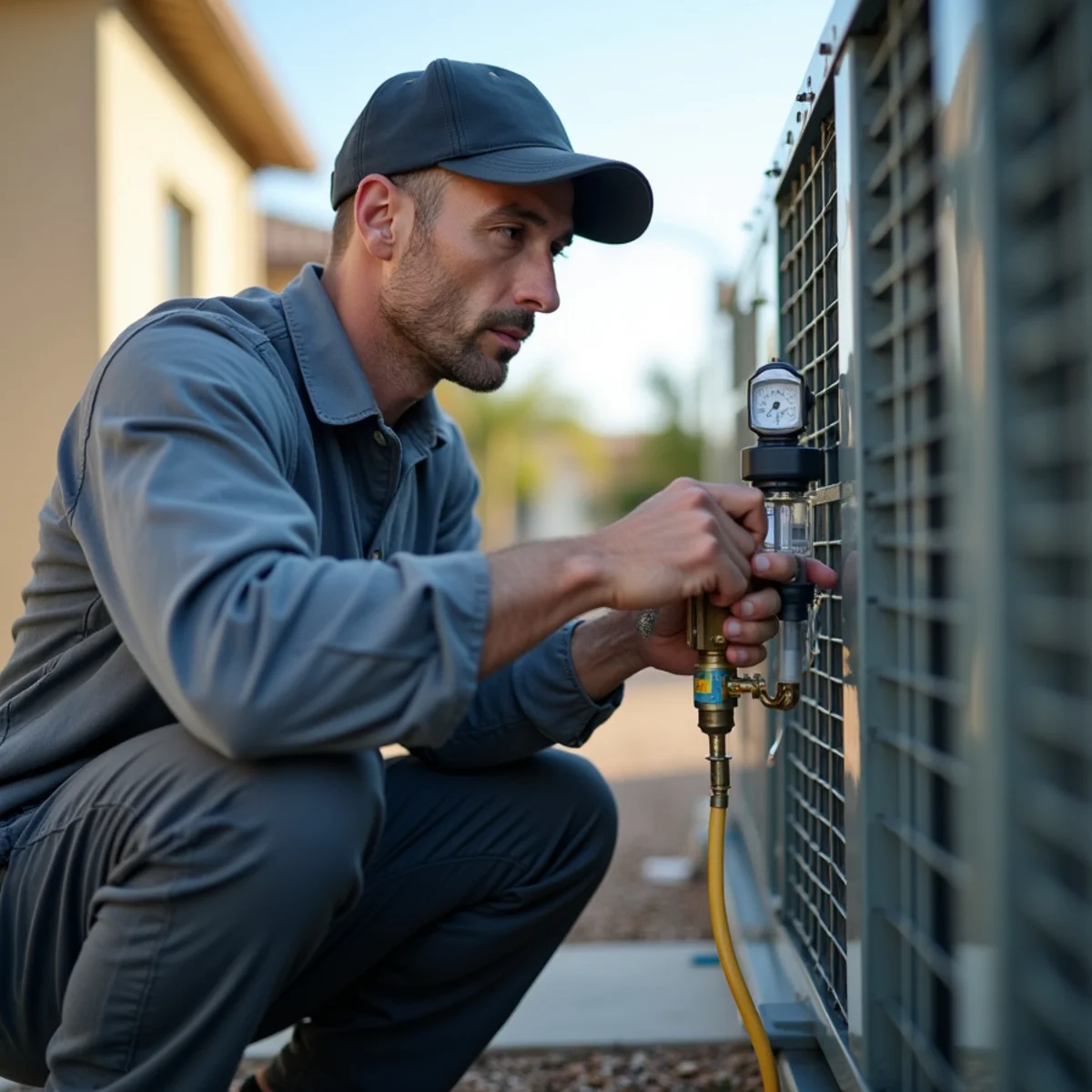
What affects the cost
Leak repairs vary widely because the fix ranges from a cheap valve core to a leaking evaporator coil. Most fall in the $129–$1,200 band; a coil replacement plus charge is higher. Factors:
Where the leak is
An accessible fitting or Schrader core is inexpensive; a leaking evaporator or condenser coil is a bigger repair.
Refrigerant type and amount
R-410A and low-GWP refrigerants have different costs, and a fully empty system needs a full charge weighed in.
Detection method needed
A stubborn, intermittent leak may require dye or nitrogen testing and a return visit, which adds to the diagnosis.
System age
On an old system with a leaking coil, replacement often makes more sense than an expensive coil repair — we give you both numbers.
No surprise pricing. Every job gets a written, line-item quote you approve before work begins. Prices above are honest ranges, not promises — your exact number depends on your equipment and home.